Choosing marble for a dining table is not simply a choice of color. It is a decision about natural variation, daily care, and the way a room feels. The question “why choose marble over quartz for a dining tabletop” often begins with appearance. Marble’s fine veining and subtle shifts in tone make each slab distinctive. A pale Chinese marble top, for example, can bring soft movement to a dining room without competing with wood chairs or warm lighting. No two surfaces look exactly alike. That individuality is part of the appeal.
Marble also feels cool and substantial to the touch. Its polished surface reflects light across the table, while honed finishes offer a quieter, less glossy look. Quartz, by contrast, is engineered for a more consistent pattern and can suit buyers who want easier day-to-day upkeep. Marble is porous, so acidic foods such as lemon juice or wine may etch its surface, and sealing can help reduce staining. It does not prevent every mark. That matters during busy family meals. A coaster, a quick wipe, and realistic expectations can make a difference.
For buyers comparing China’s marble options, ask about the specific stone, finish, slab variation, and care guidance rather than relying on a broad label. View a full slab if possible; a small sample may hide dramatic veining. Marble rewards attention, but it can also show the evidence of use. Some owners value that evolving character. Others may find it frustrating. The right choice depends on your room, habits, and comfort with maintenance.
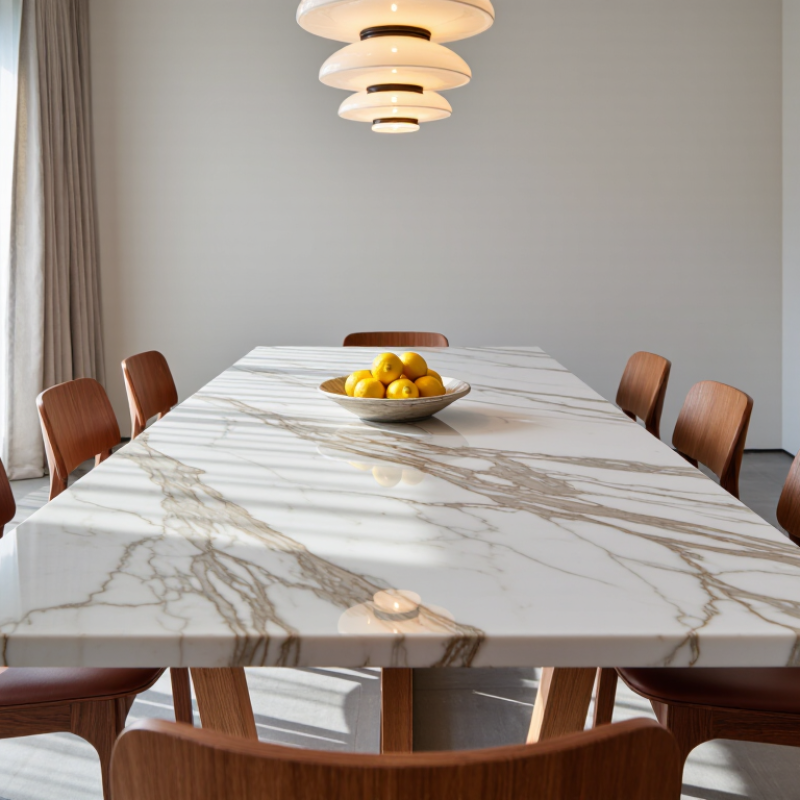
Chinese marble is natural stone quarried in different regions, with colors and veining shaped by local geology. No two slabs are exactly alike. A warm cream surface may carry thin grey lines, while another slab from the same block can show broader patterns. That variation gives a dining table character, but it also means a small sample may not represent the finished top. Ask to inspect the actual slab before fabrication.
Engineered quartz is made from mineral aggregates bound with resin and pigments. Its pattern and color are generally more consistent, and its low porosity makes routine spills easier to manage. Still, it is not indestructible. Heat can damage some quartz surfaces, so use a trivet for hot dishes.
Marble needs different care: acidic foods such as lemon juice or vinegar can dull its surface, and sealing may reduce staining without preventing every mark. Small details matter.
The practical choice depends on how the table will be used. For a formal room where distinctive veining is important, marble may be worth the extra care. For frequent meals and simpler cleanup, quartz can be more convenient. Compare full slabs, finishes, edge profiles, and care instructions with a qualified fabricator. Neither material is maintenance-free, and personal preference sometimes matters more than the technical comparison.
Marble and quartz create different visual rhythms on a dining table. Marble’s veining forms naturally, so one slab may show soft, cloud-like bands while another carries sharp gray lines or warm mineral flecks. The Natural Stone Institute’s Dimension Stone Design Manual recognizes variation in color and veining as an inherent feature of natural stone. That means a small sample cannot promise an exact match to the finished tabletop. View the actual slab in person, ideally under lighting similar to your dining room. Look closely at the edges, too; veins may appear differently after fabrication. Subtle, but noticeable.
Quartz offers a more controlled appearance. Its pattern is manufactured, so repeated color and veining are generally easier to specify across a project. Houzz’s 2024 U.S. Kitchen Trends Study reported that 42% of renovating homeowners choosing countertops selected engineered quartz. This is a preference measure, not proof of superior performance or beauty. For a dining table, the choice is visual: marble brings one-of-a-kind movement, while quartz can deliver a more consistent pattern. One caveat: marble’s variation can feel expressive in a bright room, yet busy veining may compete with patterned dishes. I would compare full slabs beside your chairs and tableware—not just polished samples. Natural variation is part of marble’s appeal, but it also asks for a little flexibility.
For a dining table, durability means more than surviving a dropped fork. It also means handling plates, spills, and daily cleaning without constant worry. Marble is hard, but its surface can scratch or etch when exposed to acidic foods such as lemon, vinegar, or tomato sauce. Sealer can reduce staining; it does not prevent etching. Wipe spills promptly, and use coasters for wine glasses. Small habits matter. A polished finish may show marks more clearly, while a honed finish can disguise them but may absorb spills more readily. A China-sourced marble slab should be assessed individually, since color, veining, and stone characteristics vary.
Quartz is generally less porous, so everyday spills are often easier to clean before they set. It can suit busy households that prefer less routine sealing. Still, quartz is not indestructible: a heavy pan can chip an edge, and high heat may damage the resin in the surface. Use trivets, and avoid cutting directly on either material. Marble can develop a lived-in patina, which some families welcome and others find frustrating. That difference is easy to underestimate. Choose based on the care you will actually maintain, not only on a showroom sample.
When comparing China-sourced marble with quartz for a dining table, consider daily care before the purchase price. Marble is natural and porous, so a penetrating sealer can reduce staining, but it does not make the surface spill-proof. Wipe wine, citrus juice, and oily sauces promptly with a soft cloth and mild cleaner. Acidic foods may leave dull etch marks, even when the stone is clean. It is not effortless. A pale ring from a forgotten glass can become part of the table’s story.
Quartz usually needs less routine attention because its resin-bound surface is nonporous. Still, hot cookware can discolor or damage the resin, so use a trivet. Repairs also differ. A stone professional may polish some marble etching or fill a small chip, though the repaired area can remain visible under certain light. Quartz chips may be repairable, but matching the pattern and sheen is not always exact. Small marks happen. Over years, compare sealing, cleaning, and possible repair costs with the local price of skilled labor. Marble varies by slab, and quartz quality varies too; inspect a full sample before deciding.
Natural marble is commonly resealed every 6–12 months; the chart shows the midpoint of that guidance (1.5 applications per year). Engineered quartz generally does not require sealing.
Fewer sealing tasks can reduce routine upkeep, but they do not determine total ownership cost. Cleaning, installation, repairs, and replacement costs vary with the material, product, location, and type of damage. Marble can etch or stain; quartz can be damaged by excessive heat and may be difficult to repair invisibly.
A dining table should suit the way your home is used, not just the way it looks in a showroom.
Marble brings natural veining, cool touch, and subtle variation; no two slabs look exactly alike. A carefully selected Chinese marble slab can anchor a room with warm cream tones or dramatic grey lines. But it is not carefree. Marble can etch when acidic foods, such as lemon or tomato, sit on the surface. Use coasters and wipe spills promptly. Small marks may become part of its story—or simply annoy you.
Houzz’s 2024 U.S. Kitchen Trends Study found that 40% of renovating homeowners chose engineered quartz for countertops. That figure describes kitchens, not dining tables, but it shows quartz’s appeal for everyday practicality. Quartz is generally less porous and needs no routine sealing, though hot cookware can damage some resin-based surfaces.
No surface is effortless. For busy family meals, quartz may mean fewer care worries; for a quieter dining space, marble’s changing patterns may matter more than perfect uniformity. Before buying, inspect the actual slab under natural light, check its finish and edge, and ask the supplier about sealing and stain care. I would not pretend marble is the sensible choice for every household. It is a personal trade-off.
Each slab has distinct veining and color. It can make a dining room feel personal. The variation is part of its appeal.
Usually. Quartz is less porous, so many spills are easier to clean. It still needs care.
Yes. Acidic foods can dull marble, even if the surface is sealed. Wipe spills promptly.
No. Sealer can reduce staining, but it cannot prevent every mark or acidic etch. That distinction is easy to overlook.
High heat may damage the resin in quartz. Use a trivet under hot pans and dishes.
Polished marble may show marks more clearly. Honed marble can disguise some marks but may absorb spills more readily. Neither is worry-free.
A stone professional may polish some marble etching or repair small chips. Quartz chips may also be repairable, but the match may remain visible.
View the full slab, not only a small sample. Compare its finish, edge profile, care needs, and likely repair costs. Samples can mislead.
Chinese marble offers dining tables a distinctive natural character, with veining, color shifts, and subtle differences that make each slab unique. Engineered quartz, by contrast, is manufactured for a more consistent appearance and typically offers a broad range of uniform patterns. The question of why choose marble over quartz for a dining tabletop often comes down to personal taste: marble brings organic variation and a sense of timelessness, while quartz favors visual consistency and convenience.
Both materials can serve everyday dining needs, but they differ in upkeep and repair. Marble is porous and may need sealing and prompt attention to spills; scratches or etching may also require professional care. Quartz is generally less porous, though it can still be affected by heat or damage. Comparing installation, routine care, repair options, and long-term costs can help homeowners choose a surface that fits their lifestyle, budget, and preferred look.

Captain Living