How to Choose a Rug for Under Your Dining Table

Time:2026-10-30 Author:Oliver
0%

A dining-room rug does more than make a table setting feel finished. It softens footsteps, frames the dining area, and can reduce chair noise on hard flooring. But a rug that looks perfect in a showroom may become frustrating when chairs catch its edge or crumbs settle deep in a thick pile. Spilled sauce happens. Choosing well means balancing appearance with daily use.

Before comparing colors and patterns, measure the table and consider how far chairs move when someone sits down or stands up. In most dining spaces, the rug should extend beyond the table enough to keep chair legs on its surface, even when pulled back. A low-pile, tightly woven rug is often easier to clean than a shaggy style, though material, household routines, and care labels matter. These are practical starting points, not strict rules.

If you have wondered, “why do I need a rug under my dining table,” the answer depends on your room. A rug can define an open-plan dining zone, protect flooring from everyday scuffs, and add warmth underfoot. It can also demand regular vacuuming and quick attention to spills. This guide explains how to choose a size, shape, material, and design that suit your table and lifestyle. It also considers what can go wrong: a rug that is too small, slippery, or difficult to maintain. I’d measure twice. Your room’s real use matters more than a staged photo.
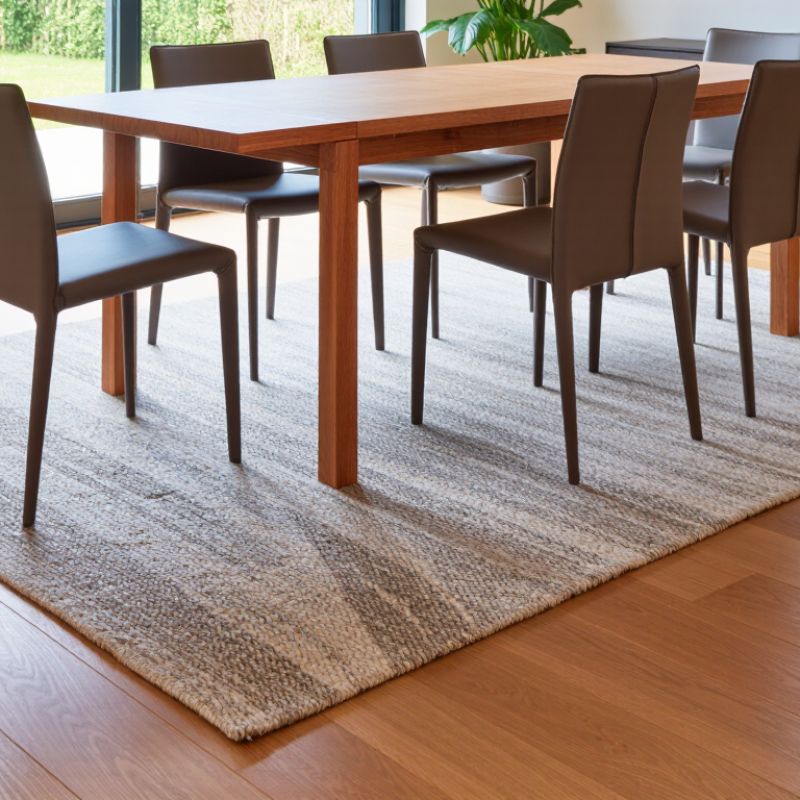
How to Choose a Rug for Under Your Dining Table

Assess Your Dining Area and Table Dimensions

Measure the dining area before choosing a rug. Note the table’s length and width, then measure the floor space around it. Include nearby walls, door swings, and the path people use to enter the room. These details matter. A rug that fits the table may still obstruct a doorway or narrow the walking route.

The National Kitchen & Bath Association’s kitchen-planning guidelines use 36 inches as a minimum walkway clearance. This is a circulation benchmark, not a rug-sizing rule. Keep the main route clear. For chair comfort, a widely used interior-design rule is to extend the rug about 24 inches beyond each table edge, so pulled-back chairs remain on the rug. For a 36-by-72-inch table, that suggests a rug near 84 by 120 inches. Check the actual chair footprint, too; some chairs need more room. Pull each chair out as if someone were sitting down, then measure again. I still find this step easy to underestimate. An imperfect fit may look fine when the room is empty, but feel cramped at dinner.

Choose a Rug Size That Keeps Chairs on the Rug

A dining rug should leave enough space for chairs to move without catching on its edge. Measure the tabletop, then add about 24 to 30 inches on every side. That extra border usually keeps chair legs on the rug when someone sits down or pushes back. Measure twice.

Include the chairs in your test, not just the table. Pull one chair out as far as it would normally move, then check where its back legs land.

For example, a 40-inch-wide table may need a rug roughly 88 to 100 inches wide, depending on chair size and clearance. A narrow rug can look centered but still leave the chairs half on, half off. Not just visually.

If you use extension leaves, measure the table at its largest everyday size. Mark the proposed rug outline on the floor with painter’s tape, then slide each chair in and out. This simple test reveals tight spots before you buy. The 24-inch guideline is useful, not perfect; bulky chairs or a crowded walkway may call for a different shape or size. A little awkward. Better to notice that with tape than after the rug arrives.

Select a Material for Spills, Wear, and Easy Cleaning

For a dining rug, choose a pile that matches the mess you expect, not just the room’s palette. Polypropylene is moisture-resistant and often easy to spot-clean, while wool feels springy and can recover well from chair traffic. Wool absorbs more readily, though, so blot wine or sauce promptly instead of rubbing it deeper. Jute and other plant-fiber rugs bring texture, but wet spills can leave stubborn marks. Spills happen. Textile Exchange’s Materials Market Report 2024 estimates polyester made up 57% of global fiber production in 2023. That figure describes the wider fiber market, not rug performance, so check the rug’s care label before buying.

For frequent meals, look for a low, dense pile and a washable or cleanable construction. Crumbs are easier to lift, and chair legs are less likely to catch. The Carpet and Rug Institute’s Seal of Approval program assesses cleaning products for soil removal, resoiling, texture retention, and water removal—useful criteria when comparing care options. A rug’s material still matters: oil-based spills may cling, and repeated scrubbing can roughen fibers. Test cleaners on a hidden spot first. A practical detail: pull chairs out as you would during dinner, then measure the rug so all legs stay on it. A cream-colored rug can look perfect in a showroom; at home, tomato sauce may change your mind.

Match the Rug Shape and Style to Your Dining Set

A dining rug should echo the table’s shape without copying every detail. Pair a round table with a round rug for a softer, centered look; a rectangular rug suits long tables and narrow rooms. For a square table, try a square rug, or use a round one to loosen the geometry. Grand View Research’s 2024 Area Rugs Market report estimated the global market at roughly $11 billion in 2023, reflecting the broad range of styles and materials available. Market size is not a design rule, though.

Match the rug’s visual weight to the dining set. A dark, solid-wood table can feel grounded on a patterned wool rug, while pale timber often works well with a quiet, textured weave. Keep chair movement in mind: the rug should extend beyond the pulled-out chairs, or chair legs may catch its edge. A common interior-design guideline is to allow about 24 inches of extra rug on each side. Measure with chairs pulled back. Almost-matching patterns can look accidental; contrast often feels more deliberate.

Tips: Repeat one color from the chairs, tabletop, or nearby curtains. Keep it simple. For a sculptural table, choose a restrained rug; for plain furniture, a small geometric pattern can add life. Test a paper outline on the floor before buying. It may feel oversized at first, and that is worth reconsidering.

Position and Maintain the Rug for Everyday Use

A dining rug should stay beneath the table even when chairs slide back. Measure with every chair pulled out, then choose a rug that leaves roughly 24 inches beyond the table on each side. This gives chair legs room to move without catching the edge. Check doorways and nearby walkways, too. A thick pile can snag chair feet, while a low, dense weave is easier to clean. The fit may still feel slightly generous; that is usually better than a rug that shifts under moving chairs.

Daily use brings crumbs, chair scuffs, and the occasional spill. The Carpet and Rug Institute recommends vacuuming at least weekly, more often in high-traffic areas, and professional cleaning every 12–18 months. Treat that interval as a guide, not a rigid deadline; fiber, household traffic, and care labels matter. Blot spills promptly with a clean cloth instead of rubbing them deeper. Let the rug dry fully before replacing furniture, and rotate it now and then to reduce uneven fading and wear.

Tips: Use a rug pad to limit slipping and protect the floor. Test cleaners on a hidden spot first. Crumbs collect under chair legs—lift the rug edge and check there regularly.

FAQS

How should I measure my dining area before choosing a rug?

Measure the table, floor space, nearby walls, door swings, and walking routes. Keep the main path clear. Measure twice.

How much should a dining rug extend beyond the table?

Allow about 24 to 30 inches on each side. This usually keeps chair legs on the rug when chairs slide back.

What rug size might fit a 36-by-72-inch table?

A rug near 84 by 120 inches allows about 24 inches beyond each edge. Check your chairs; some need more space.

How can I check whether chairs will stay on the rug?

Pull a chair out as if someone were sitting down, then check where its back legs land. A narrow rug may look centered but still feel awkward.

Should I measure an extendable table with its leaves in place?

Measure it at the largest size you use regularly. Mark the rug outline on the floor with masking tape, then slide each chair in and out.

Which rug shape works with different dining tables?

Round rugs often suit round tables, while rectangular rugs work well with long tables. A round rug can soften a square table’s strong lines.

How can I match a rug to my dining set?

Repeat one color from the chairs, table, or curtains. A textured rug can suit pale timber; a patterned rug may balance a dark table.

Is a 36-inch walkway clearance a rug-sizing rule?

No. It is a circulation benchmark, not a rug-sizing rule. Still, protect the route people use to enter the room. A tight path can spoil dinner.

Conclusion

Choosing the right rug for under your dining table starts with measuring the dining area and table, then allowing enough space for chairs to remain on the rug even when pulled out. This helps create a comfortable, balanced setup and can protect the floor from daily movement. If you have wondered, “why do I need a rug under my dining table,” a well-chosen rug can also define the dining zone, soften the room, and make meals feel more inviting.

Consider materials that can handle spills, frequent use, and straightforward cleaning. Choose a shape that complements your table and dining set, and select a style that fits the room without overwhelming it. Before placing the rug, make sure it lies flat and is positioned evenly beneath the table. Regular vacuuming and prompt attention to spills will help keep it looking neat and practical for everyday use.

Oliver

Oliver

Oliver is a seasoned marketing professional with a wealth of expertise in driving brand awareness and engagement. With a deep understanding of our company's product offerings, he consistently delivers high-quality content that enriches our professional blog. His insights not only shed light on......