Creating a comfortable and functional living space in smaller homes can be challenging. According to a recent report from the American Institute of Architects, over 50% of homeowners struggle with space management. This highlights a pressing need to understand how to arrange living room furniture in a small space effectively.
Smart furniture placement not only enhances aesthetics but also maximizes usability. Consider that 70% of people report feeling cramped when furniture is misaligned or overcrowded. Finding that balance of style and space is crucial. Employing multifunctional furniture and clever layouts can significantly improve comfort and appearance. However, common mistakes often arise. For instance, owners might overcrowd the room, limiting movement and creating a cluttered look.
Remember, it's not just about fitting furniture in a room; it’s about creating an inviting atmosphere. Reflecting on your specific needs can guide your choices. Additionally, professionals suggest that experimentation is key. Sometimes, what feels right may actually require adjustment. Embracing a trial-and-error approach can reveal surprisingly optimal arrangements. So, when exploring how to arrange living room furniture in a small space, keep flexibility in mind.
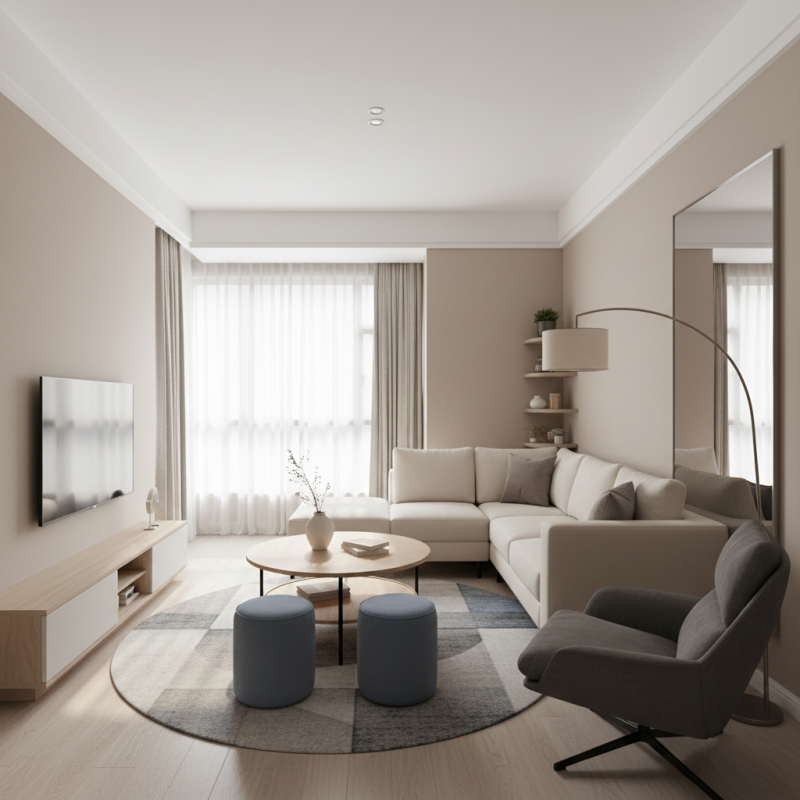
Small spaces challenge our creativity. In 2023, savvy designers emphasize multifunctional furniture. A sleek sofa-bed can transform your living area into a guest space. Additionally, nesting tables save space and provide flexibility for entertaining.
Light colors are a key trend in small living rooms. They create an illusion of openness. Reflective surfaces, like mirrors, enhance this effect. However, be cautious. Too many reflective items can overwhelm. Balance is essential.
Lighting plays a crucial role in design. Layered lighting makes a space feel warmer and more inviting. Floor lamps can save valuable tabletop space. Yet, ensure they don’t block walkways. Consider the flow of movement when arranging furniture. Keep in mind the importance of functionality combined with aesthetics.
When arranging furniture in small living spaces, understanding essential measurements is critical. The room size largely dictates the arrangement possibilities. Measure the room's dimensions accurately. Keep in mind that a well-proportioned layout enhances both usability and aesthetics.
Consider the size of your furniture pieces. Large sofas can overwhelm small spaces. Opt for compact designs that fit comfortably within the room. Aim for at least 18 inches between furniture for walking paths. This distance allows for easy movement without feeling cramped.
Take note of your
lifestyle needs. If you entertain often, leave room for additional seating. You may need to get creative with arrangements that aren't typically comfortable. Sometimes, the best layout is a bit unconventional. Reflect on how often you’ll move furniture. Flexibility is vital in small spaces. Embrace a layout that feels right for your unique situation.
Color psychology plays a crucial role in how individuals perceive small living spaces. Research indicates that colors can influence mood and even spatial awareness. A study by the Institute for Color Research reveals that up to 90% of snap judgments about environments are based on color alone. This statistic highlights the importance of selecting the right hues for small areas.
Light colors, such as soft whites and pastels, can make a room feel larger. They reflect more light, creating an illusion of openness. Dark colors, however, can make space feel enclosed. Expert designers often suggest using cool tones to enhance this effect. A survey by the Interior Design Society shows that 80% of clients prefer lighter shades for compact spaces. The challenge lies in balancing warmth and light, ensuring the area feels inviting.
Textures and patterns also interact with color psychology, impacting perception further. For example, a mixture of patterns can create visual clutter, which can feel overwhelming in smaller rooms. Finding the right balance is essential. Incorporating a single bold piece can energize the space, yet too much can lead to chaos. Reflecting on these details can help optimize your living area.
In a small living room, dual-purpose furniture can transform the space. Consider a sofa bed to accommodate guests. It offers comfort by day and can quickly convert at night. A coffee table that doubles as a storage unit can keep clutter at bay. Look for designs that blend in seamlessly with your decor.
Use ottomans that can be both seating and storage. They save space and serve multiple functions. Foldable chairs are also great for occasional use. You can tuck them away when not needed. Try a wall-mounted desk that collapses when you don't need it, maximizing floor space.
When arranging your space, think vertically. Tall shelves draw the eye upward and make the room appear larger. Always assess if each item serves a purpose. If something is just taking up space, reconsider its place. Aim for a balance of functionality and style.
| Tip Number | Tip Description | Recommended Furniture Type | Functionality |
|---|---|---|---|
| 1 | Use dual-purpose furniture items | Sofa beds | Sleep and seating |
| 2 | Choose modular furniture | Modular sofas | Flexibility in arrangement |
| 3 | Incorporate wall-mounted shelves | Floating shelves | Storage and decor |
| 4 | Use ottomans with storage | Storage ottomans | Seating and hidden storage |
| 5 | Select light-colored furniture | Light wood or white finishes | Makes space feel larger |
| 6 | Choose a round coffee table | Round tables | Easier movement in tight spaces |
| 7 | Create distinct zones | Area rugs | Functional areas for different activities |
| 8 | Incorporate multifunctional furniture pieces | Convertible desks | Work and dining |
| 9 | Utilize vertical space | Tall bookcases | Maximize storage |
| 10 | Add mirrors for depth | Decorative mirrors | Visual expansion of space |
Creating a functional small living room requires innovative storage solutions. Using multi-functional furniture can maximize space. Consider a coffee table that doubles as storage. Ottomans with hidden compartments are also great choices. These pieces allow for easy organization of blankets, books, or magazines.
Wall-mounted shelves can save precious floor space. They provide storage without taking up room. Use decorative bins or baskets on these shelves for a stylish look.
Hanging hooks can keep items off the floor. They are ideal for towels or accessories.
Reflecting on what you truly need is also essential. Avoid cluttering your space with items that aren’t used. A minimalist approach can lead to a more organized feel.
Reassess your furniture arrangement regularly. This can help you adapt as your needs change. Remember, every small space has potential with the right planning.
: Accurate measurements of the room dimensions are critical for a good layout.
Opt for compact designs that fit comfortably. Large pieces can overwhelm.
Aim for at least 18 inches between pieces for walking paths and easy movement.
Light colors create an illusion of openness. Dark colors can make spaces feel cramped.
Research indicates most clients prefer lighter shades for small spaces.
Too many patterns can create visual clutter. Balance is crucial for a pleasant space.
Dual-purpose furniture maximizes space and functionality, like sofa beds or storage ottomans.
Use vertical storage solutions like tall shelves to draw the eye upward.
Flexibility is vital. Always reassess if items serve a purpose in the layout.
Look for multifunctional furniture to keep items tidy and well-organized.
When considering how to arrange living room furniture in a small space, it is essential to understand the latest trends for 2023. Emphasizing minimalism and functionality, designers are favoring dual-purpose furniture that seamlessly combines everyday utility with style. Essential measurements play a pivotal role in ensuring optimal furniture arrangement, allowing for easy navigation and maintaining an open atmosphere despite limited square footage.
Moreover, the psychology of color is crucial in small living rooms, as certain hues can create an illusion of spaciousness and tranquility. Innovative storage solutions are also key, incorporating hidden compartments and creative shelving to enhance organization without sacrificing aesthetics. By combining these elements, homeowners can transform their compact living areas into functional and inviting spaces.

Captain Living