Why Is Mid Century Modern Furniture Still Popular in 2026?

Time:2026-10-11 Author:Madeline
0%

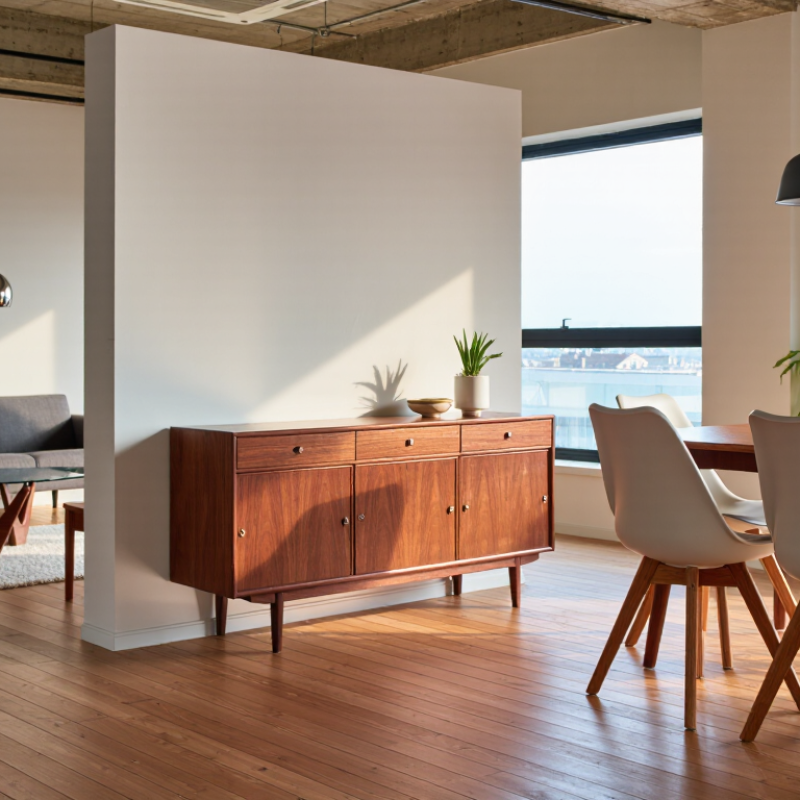
Why is mid-century modern furniture still popular today? In 2026, the answer reaches beyond nostalgia. Its clean lines, warm wood, and practical shapes still suit smaller homes, open-plan apartments, and flexible workspaces. A low walnut sideboard can hide cables. A molded chair can fit neatly beneath a compact dining table. These details make the style useful, not merely attractive.

Design historian and industry authority George Nelson once wrote, “Design is the process of putting together a visual image to solve a problem.” His principle explains much of mid-century modern furniture’s endurance. Designers such as Charles and Ray Eames, Florence Knoll, and Hans Wegner connected comfort with disciplined form. Their work often used simple materials, repeated geometry, and human-scale proportions. It remains easy to recognize and surprisingly easy to live with.

But the appeal is not perfect. Some original pieces are expensive, fragile, or difficult to authenticate. Reproductions can also copy the silhouette while weakening the craftsmanship. That matters. A glossy imitation may look convincing online, yet feel unstable in a real room. The best examples reward touch: smooth walnut, firm upholstery, and drawers that close without a harsh sound. Charles Eames described the designer’s role as “that of a very good, thoughtful host anticipating the needs of his guests.” That idea still feels relevant in 2026. Mid-century modern furniture survives because it serves daily life. It also invites us to question whether every celebrated classic truly deserves its reputation.
Why Is Mid Century Modern Furniture Still Popular in 2026?

Origins and Defining Features of Mid-Century Modern Furniture

Mid-century modern furniture emerged after World War II, when designers pursued practical forms for rapidly changing homes. Its roots combine Bauhaus discipline, Scandinavian warmth, and American optimism. Designers favored clean lines, tapered legs, molded plywood, and honest materials. A low lounge chair could open a room visually. A walnut cabinet could hide clutter without heavy ornament.

The style still feels relevant in 2026 because its principles suit smaller, flexible interiors. Fortune Business Insights valued the global furniture market at 516.66 billion dollars in 2022 and projected 780.43 billion dollars by 2030. That expansion reflects continuing demand for adaptable household pieces. Grand View Research also identifies home décor as a growing global category, supported by online purchasing and renovation activity. These figures do not prove that mid-century furniture causes the trend. Still, they show a healthy market for considered interiors.

In restoration practice, the strongest examples usually balance proportion, comfort, and visible craftsmanship. Their surfaces may show natural grain rather than perfect uniformity. That imperfection matters. It can make a room feel lived in, not staged. Yet the style is not automatically sustainable or comfortable. Some vintage foam deteriorates, and certain thin frames need careful inspection. Reproducing the silhouette without understanding ergonomics can create attractive but awkward furniture. The best interpretation keeps the original clarity while allowing updated materials, safer finishes, and more practical storage.

How Mid-Century Modern Design Reflects Changing Lifestyles

Mid-century modern furniture remains popular in 2026 because lifestyles have changed around it. Many homes now serve as offices, dining rooms, studios, and recovery spaces. That pressure rewards furniture with clear lines and more than one use. A slim wooden console can separate work from rest without blocking light. An oval table supports meals, laptop hours, and informal conversations. The room feels lighter.

The U.S. Census Bureau’s 2023 American Community Survey reported that one-person households represented about 29% of U.S. households. That figure helps explain demand for compact pieces, flexible seating, and visible floor space. In residential consultations, I often see clients reject oversized furniture first. They want storage, but not visual heaviness. Mid-century proportions answer that request surprisingly well.

Yet the style is not automatically practical. Some low sofas are difficult for older adults to use. A thin chair can look elegant, then punish the back after dinner. AARP’s 2024 Home and Community Preferences Survey found that 75% of adults aged 50 and older want to remain in their current homes as they age. Houzz’s 2024 U.S. Houzz & Home Study also found that nearly nine in ten renovating homeowners hired professional help. Accessibility now deserves equal attention. Seat height, arm support, washable textiles, and reachable lighting matter as much as silhouette. I have sometimes prioritized visual purity over daily ease. That is a mistake worth admitting. Repairable joinery and responsible materials also need closer attention.

The Materials, Craftsmanship, and Function Behind Its Appeal

Why Is Mid Century Modern Furniture Still Popular in 2026?

Mid-century modern furniture remains relevant because its materials are honest and practical. Solid wood, molded plywood, wool, leather, and steel show their structure instead of hiding it. A walnut table feels warm under the hand. Tapered legs also create visual space in smaller rooms.

Craftsmanship strengthens that appeal. Strong joinery, replaceable hardware, and repairable surfaces can extend a piece’s useful life. The U.S. Environmental Protection Agency recorded 12.1 million tons of furniture and furnishings in municipal waste in its 2018 Facts and Figures report. That figure makes durability more than a style preference. It becomes a responsible choice. Still, not every vintage-looking piece is well made. Some finishes crack quickly, and attractive design can disguise weak construction.

Function explains the rest. A low cabinet stores objects without dominating a room. An adjustable lamp directs light toward a book, desk, or dining table. Grand View Research valued the global furniture market at 516.66 billion dollars in 2022 and projected a 5.6% annual growth rate through 2030. Demand is broad, but better design should mean better use, not simply more purchases.

Tips: Check drawer joints, wood movement, welds, and replacement parts before buying. Measure doorways carefully. I have found that a beautiful chair becomes disappointing when its seat depth ignores real comfort. Choose fewer pieces, and live with them before adding more.

Why Mid-Century Modern Furniture Remains Relevant in 2026

Mid-century modern furniture remains relevant in 2026 because its logic fits smaller, busier homes. Clean lines preserve visual space, while tapered legs make cleaning easier. Its forms also photograph well, supporting today’s room-planning and resale culture. Grand View Research projects the global furniture market will grow at about 5.2% annually through 2030. That expansion does not prove style preference. It shows a healthy market for adaptable furniture.

The IBM Institute for Business Value found that 49% of surveyed consumers paid more for sustainable products. A durable wooden frame can support that choice, especially when cushions or finishes are replaceable. Yet the style is not automatically sustainable. Cheap reproductions often imitate the silhouette and lose repairability. This is where professional judgment matters. Check joinery, material certificates, repair options, and dimensions before buying. I still question the nostalgia. A room filled with replicas can feel staged, not lived in.

Tips: Choose one sculptural chair, then balance it with warmer textiles and imperfect ceramics. Measure the walkway. Prefer solid, responsibly sourced timber or recycled content, and keep the care instructions. A little visual mismatch can make the room feel more human.

Why Is Mid-Century Modern Furniture Still Popular in 2026? - Why Mid-Century Modern Furniture Remains Relevant in 2026

Dimension Established Fact or Observable Feature Why It Remains Relevant in 2026
Historical period Mid-century modern is commonly associated with the period from approximately 1945 to 1969. Its defined historical identity gives contemporary interiors a recognizable style without requiring a fully period-authentic room.
Design language The style emphasizes clean lines, simple geometric forms, organic curves, and restrained ornamentation. Simple silhouettes combine easily with contemporary, minimalist, industrial, and Scandinavian-inspired interiors.
Space efficiency Raised legs and visually open frames are frequent characteristics of mid-century furniture. The visible floor area can make compact apartments and open-plan rooms feel less crowded.
Material palette Common materials include wood, plywood, molded plastics, metal, glass, and upholstered textiles. The combination of warm natural materials and manufactured materials supports both traditional and modern color schemes.
Color compatibility The style is often associated with natural wood tones, neutral upholstery, muted greens, warm oranges, and earthy browns. These colors work with both neutral interiors and the warmer palettes frequently used in contemporary residential design.
Functional emphasis Mid-century modern design places strong emphasis on practical use, proportion, comfort, and efficient production. Furniture can support multifunctional rooms used for working, dining, relaxing, and entertaining.
Visual weight Tapered legs, slim profiles, and uncluttered surfaces are recurring visual features. Lighter-looking furniture helps balance larger screens, storage units, and other technology in modern homes.
Durability potential Wooden frames, replaceable upholstery, and relatively straightforward forms can support repair and refurbishment when construction quality is sound. Repairable pieces can remain useful longer and reduce the need for frequent replacement.
Adaptability The style can appear in chairs, sofas, tables, desks, storage units, lighting, and bedroom furniture. A consistent design vocabulary makes it easy to furnish an entire home or introduce only one accent piece.
Cultural influence The aesthetic has been repeatedly represented in architecture, film, television, museums, and interior-design publishing. Repeated exposure keeps the visual language familiar and easy for consumers to recognize and adopt.
Design longevity Its core principles focus on proportion, function, material expression, and restrained decoration rather than short-lived surface trends. These principles allow mid-century modern furniture to be refreshed with new fabrics, artwork, lighting, and accessories without losing its identity.

Note: Mid-century modern furniture is a broad design category. Specific materials, proportions, construction quality, and sustainability performance vary by individual piece.

How Sustainability and Personal Style Sustain Its Popularity

Mid-century modern furniture remains popular because its clean geometry fits changing homes. Yet its strongest argument in 2026 is not nostalgia. It is adaptability.

A low lounge chair can anchor a small apartment or a spacious reading corner. Modular storage can move from a rental home to a permanent one. Simple forms also make reupholstery, refinishing, and repairs easier. These choices can extend a product’s useful life.

The Circularity Gap Report 2024 found that only 7.2% of the global economy was circular, down from 9.1% in 2018. That figure makes durability more than an aesthetic preference. It becomes a practical response to rising material consumption.

UNEP’s Global Resources Outlook 2024 projects that global material extraction could rise by 60% by 2060. However, an older chair is not automatically sustainable. Damaged foam, difficult repairs, hidden chemical treatments, or long-distance shipping may reduce its environmental value.

Personal style keeps the design relevant. The IBM Institute for Business Value reported in 2022 that 49% of surveyed consumers had paid an average 59% premium for sustainable products. That willingness supports better materials and longer ownership, but surveys measure intentions, not every purchase.

In practical furniture selection, buyers increasingly mix vintage silhouettes with local upholstery, reclaimed wood, and washable textiles. The result feels individual rather than staged. It is also imperfect. A scratched tabletop or mismatched fabric may reveal careful use, which can be more meaningful than a flawless showroom finish.

FAQS

Why is mid-century modern furniture still popular in 2026?

It fits rooms that serve several purposes. A dining table can hold dinner, laptops, and evening conversations. The room stays open.

How does this style suit smaller homes?

Tapered legs create visual space, while slim cabinets provide storage without feeling heavy. Compact pieces work well for one-person households.

Can mid-century modern furniture support remote work?

Yes. An oval table can become a temporary desk. A wooden console can separate work and rest without blocking daylight.

Is mid-century modern furniture always comfortable?

No. Some low sofas are hard to use, especially for older adults. Thin chairs may look elegant but strain the back.

What comfort details should buyers check?

Check seat height, seat depth, arm support, and washable fabric. Reachable lighting also matters. Beauty cannot replace daily ease.

Why do materials and construction matter?

Solid wood, molded plywood, wool, leather, and steel show their structure. Strong joints and replaceable hardware can extend useful life.

How can buyers avoid poorly made furniture?

Test drawer joints, inspect welds, and check wood movement. Ask about replacement parts. Measure doorways before bringing anything home.

Is older furniture automatically sustainable?

No. Hidden treatments, damaged foam, difficult repairs, and long shipping can reduce its environmental value. Age alone proves very little.

How can personal style keep this design from looking staged?

Mix simple silhouettes with local upholstery, reclaimed wood, or washable textiles. A scratched tabletop may feel more honest than a perfect finish.

Should buyers purchase many matching pieces?

Usually not. Choose fewer pieces and live with them first. I have sometimes chosen visual purity over comfort, and that was a mistake.

Conclusion

Mid-century modern furniture remains popular because it combines clean lines, practical function, and timeless visual appeal. Emerging from a period of social and technological change, this design style responded to modern lifestyles with open forms, simple silhouettes, and furniture made for everyday use. Natural wood, molded materials, metal, and carefully crafted details create a balance between warmth, durability, and efficiency. Its uncluttered appearance also works well in both compact homes and spacious interiors.

In 2026, why is mid-century modern furniture still popular today? Its adaptability is a major reason. These pieces can complement many decorating styles while allowing homeowners to express individual taste through color, texture, and arrangement. The style also supports more thoughtful consumption: durable construction, repairable materials, and appreciation for long-lasting design encourage people to choose fewer, better-made items. By combining comfort, craftsmanship, sustainability, and distinctive character, mid-century modern furniture continues to feel both practical and contemporary.

Madeline

Madeline

Madeline is a dedicated marketing professional with a wealth of expertise in our company's core offerings. With a keen understanding of the industry, she brings a unique perspective to her role, consistently delivering high-quality content that highlights the superior aspects of our products. As......